Formal Training vs. Learning on the Job: Why Structured SPF Courses Are Catching On
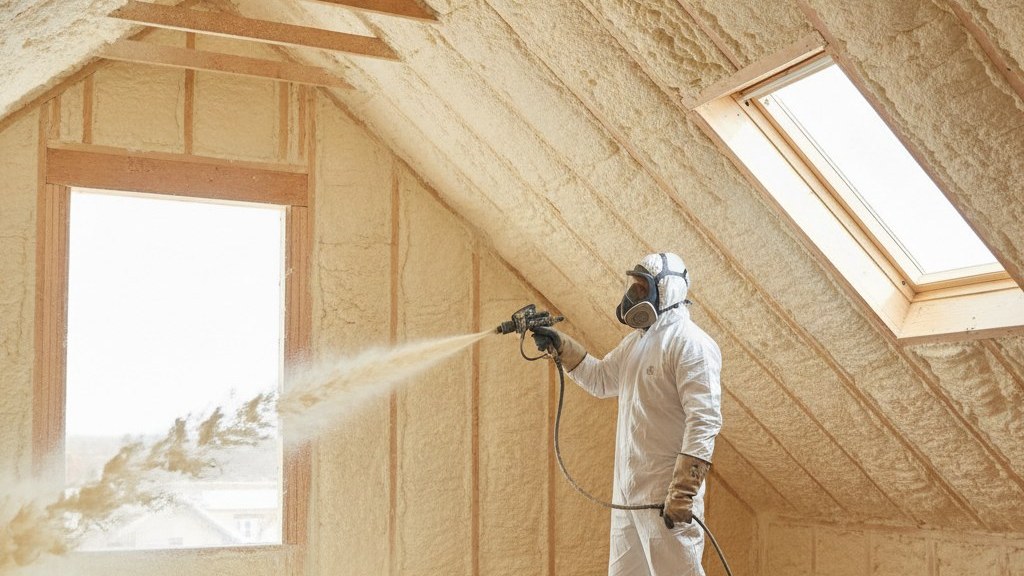
Most people currently working in spray polyurethane foam learned the trade the way most trades get learned: standing next to someone who already knew how, watching, and gradually taking over the gun. That model isn't broken, and it isn't going away — hands-on mentorship is how a huge amount of real skill in this industry gets built. But it has real limits, and more contractors and crews are adding structured, curriculum-based training on top of it rather than relying on it alone.
What on-the-job training does well
It's immediate, it's practical, and it's free in the sense that it happens during paid work rather than requiring separate time off the job. A good mentor passes along not just technique but judgment — the kind of situational read on a substrate or a rig problem that's hard to fully capture in a course.
Where it falls short
- Coverage is inconsistent — what you learn depends heavily on which jobs you happened to be on and who was training you that day
- Gaps are invisible until they cause a problem — a technique or safety gap that never came up on the jobs you've worked can go unnoticed for years
- There's usually no documentation — no record of what was actually covered, which makes it hard to demonstrate competency to a new employer, a customer, or an insurer
- Safety and compliance material is easy to skip informally, especially under time pressure on a real job
What structured training adds
A curriculum-based course is built to cover a defined body of material in a deliberate order — chemistry fundamentals before technique, technique before the harder open-cell/closed-cell distinctions, safety standards as a required course rather than an afterthought. That doesn't make on-the-job learning obsolete; it makes the on-the-job learning that follows more effective, because the fundamentals are already solid and consistent across everyone on the crew.
The documentation matters too
A course that ends in a real credential gives you something concrete: a record of exactly what was covered and what competency was demonstrated. That's useful whether you're an applicator building your resume, a crew lead standardizing onboarding, or a business owner who wants every new hire to start from the same baseline instead of whatever their previous job happened to teach them.
Not an either/or
The strongest applicators tend to combine both: structured fundamentals from a course, refined and extended by real field experience under an experienced crew lead. Spray Foam Institute's courses are built to be that first half — a solid, documented foundation — not a replacement for the field experience that comes after.
Related FAQs
Often, yes — many experienced applicators take our fundamentals course specifically to fill gaps from informal training and to earn a documented credential that reflects skill they already have.
No. Our courses are built to give you a solid, correct foundation — real proficiency still comes from continued hands-on work after the course.
More from the blog
What a Spray Foam Certification Actually Verifies (and What It Doesn't)
Certification and licensing get used almost interchangeably in this trade, but they mean different things and are issued by different kinds of organizations. Here's the difference, and why it matters.
Read article SafetyIsocyanate Exposure 101: What Every New SPF Applicator Should Understand Before Their First Job
Most SPF systems are built on MDI-based isocyanate chemistry. Here's what every new applicator should understand about that hazard before stepping onto a job site for the first time.
Read articleStart your certification path
Tell us which courses you're interested in and where you're at, and we'll follow up with the next available cohort — in-person or online.